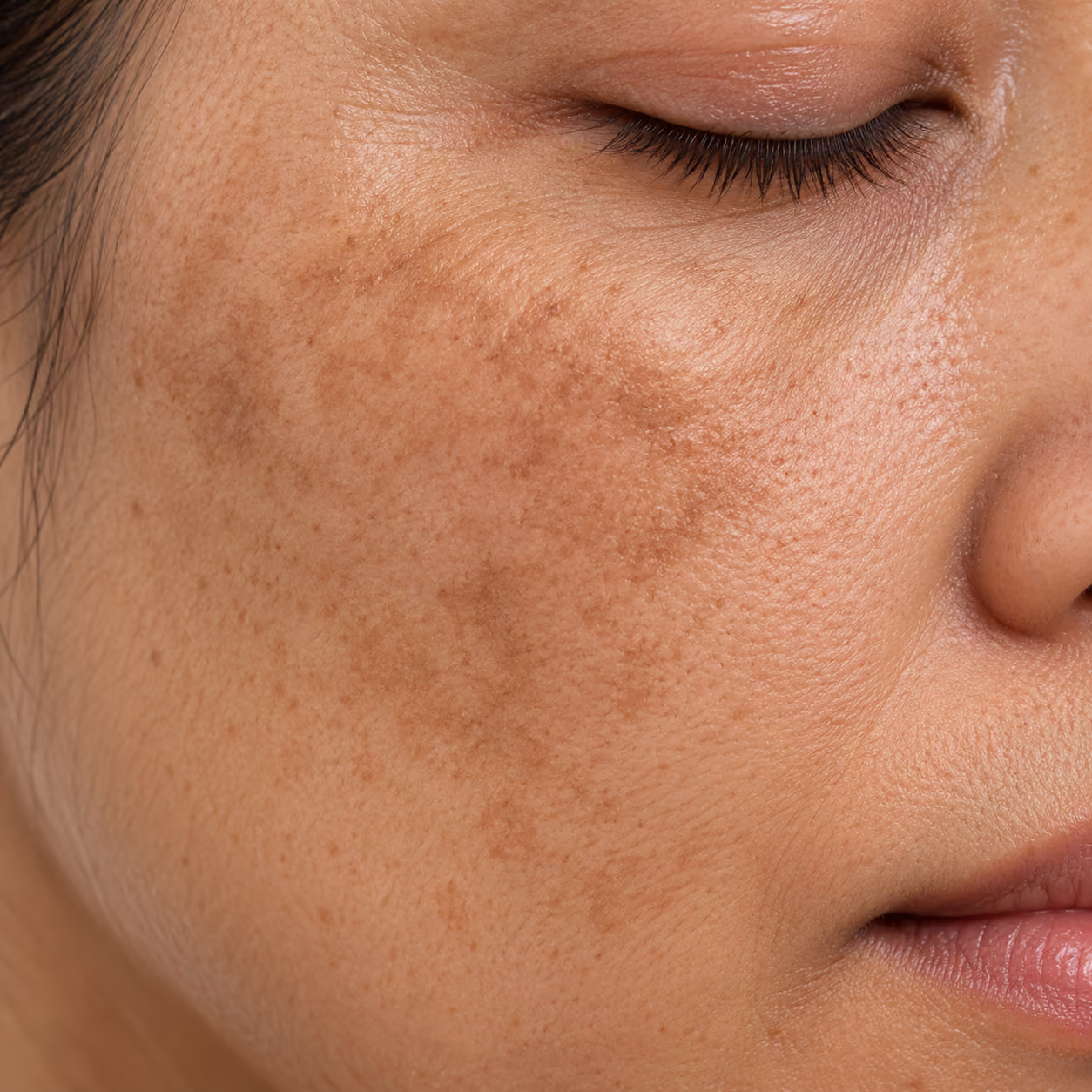
The Treatment


Before
After


Before
After


The Treatment
Melasma can be frustrating because it often fades, returns, and changes with sun exposure, hormones, heat, and other individual triggers.
At Reborn Laser Clinic, we do not treat every case of melasma the same way.
Depending on your skin, pigmentation pattern, and treatment history, we may use PicoToning with the PicoWay 1064 nm Zoom handpiece, PicoWay Resolve 1064 nm, or a combination of both.
PicoToning uses gentle full-beam picosecond energy to gradually target excess pigment across the skin, while Resolve delivers fractional microbeams beneath the surface.
This allows us to customize treatment based on what your skin actually needs, rather than using one approach for everyone.
The goal is gradual improvement in pigmentation and a more even-looking complexion, while keeping the long-term and recurring nature of melasma in mind.
Because melasma can return, laser treatment is only one part of the process. Consistent sun protection and ongoing pigment management are equally important.

how it works
Melasma is more complex than a typical sun spot, which is why treatment needs to be approached carefully and conservatively.
PicoToning uses the PicoWay Zoom 1064 nm handpiece to deliver ultra-short picosecond pulses across the skin. The energy helps target excess pigment while limiting prolonged heat exposure to the surrounding tissue.
PicoWay Resolve 1064 nm delivers the same picosecond wavelength through microscopic fractional treatment zones beneath the surface.
Depending on your skin, pigmentation, and treatment goals, we may use one treatment method or combine both as part of your personalized treatment plan.
Over time, pigmentation can gradually appear lighter and the complexion more even.
what it can do

.avif)


Before treating melasma, we take time to understand your skin and the factors that may be contributing to your pigmentation.
We assess your skin tone, pigmentation pattern, history of melasma, sun exposure, previous treatments, and how your skin tends to respond.
Before your appointment, avoid tanning and excessive sun exposure and follow any skincare instructions provided during your consultation.
Your skin should be clean and free of makeup before treatment.
Your treatment may include PicoToning with the PicoWay Zoom 1064 nm handpiece, PicoWay Resolve 1064 nm, or a combination of both.
The approach is selected based on your pigmentation, skin type, treatment history, and how your skin responds.
Most clients describe the sensation as a quick snapping or prickling feeling, accompanied by some warmth.
Treatment time varies depending on the areas being treated.
Melasma care does not end when your laser treatment does.
Your skin may appear flushed or feel slightly warm or sensitive immediately after treatment. These effects are generally temporary.
Daily broad-spectrum sunscreen is an essential part of managing melasma both during and after your treatment series.
Avoid excessive heat and sun exposure while your skin is recovering, and follow the skincare and pigment-management plan recommended for you.
QUESTIONS, ANSWERED
Absolutely. Sun protection is one of the most important parts of melasma management. Laser treatment can help improve existing pigmentation, but continued UV and visible-light exposure can contribute to recurrence. For melasma, maintaining your results is just as important as achieving them.
Yes. Melasma can worsen when the skin is exposed to excessive heat or inflammation. That is one reason we treat it conservatively. Laser settings, treatment method, and treatment intervals are selected carefully. Even with appropriate treatment, temporary darkening or post-inflammatory pigmentation can still occur.
PicoWay 1064 nm can be used across a range of skin tones, but treatment for melasma requires careful patient selection. The PicoWay melasma indication includes Fitzpatrick skin types I–IV. We also consider your pigmentation history, recent sun exposure, and tendency toward post-inflammatory hyperpigmentation before recommending treatment.
Melasma can be influenced by sun and visible light exposure, hormones, heat, and individual predisposition. Even after pigmentation has improved, these triggers can stimulate pigment production again. That is why daily sun protection and ongoing maintenance are such important parts of treatment.
Improvement is gradual. You may begin noticing areas of pigmentation becoming lighter throughout your treatment series. However, melasma should be viewed as something we manage over time rather than something we try to erase in a single appointment.
Melasma generally responds best to a series of treatments rather than a single session. The number of treatments varies depending on your pigmentation, skin type, treatment history, and how your melasma responds. We will build your treatment plan after carefully assessing your skin.
No treatment can guarantee permanent removal of melasma. Melasma is a chronic and recurrent pigment condition, meaning it can return even after significant improvement. Our goal is to improve the appearance of pigmentation while helping you develop a long-term strategy for keeping it controlled.
They use different methods of delivering laser energy. PicoToning with the Zoom 1064 nm handpiece delivers a full beam across the skin. PicoWay Resolve 1064 nm divides the laser energy into fractional microbeams, creating microscopic treatment zones beneath the surface. Depending on your melasma, skin type, and treatment goals, your personalized treatment plan may include one or both approaches.
PicoToning is a gentle treatment technique using the PicoWay Zoom 1064 nm handpiece. Rather than treating isolated pigment spots, the laser is passed across a broader area of skin using carefully selected settings to gradually improve the appearance of uneven pigmentation. Because melasma can be sensitive to heat and inflammation, treatments are approached conservatively and adjusted according to how your skin responds.